

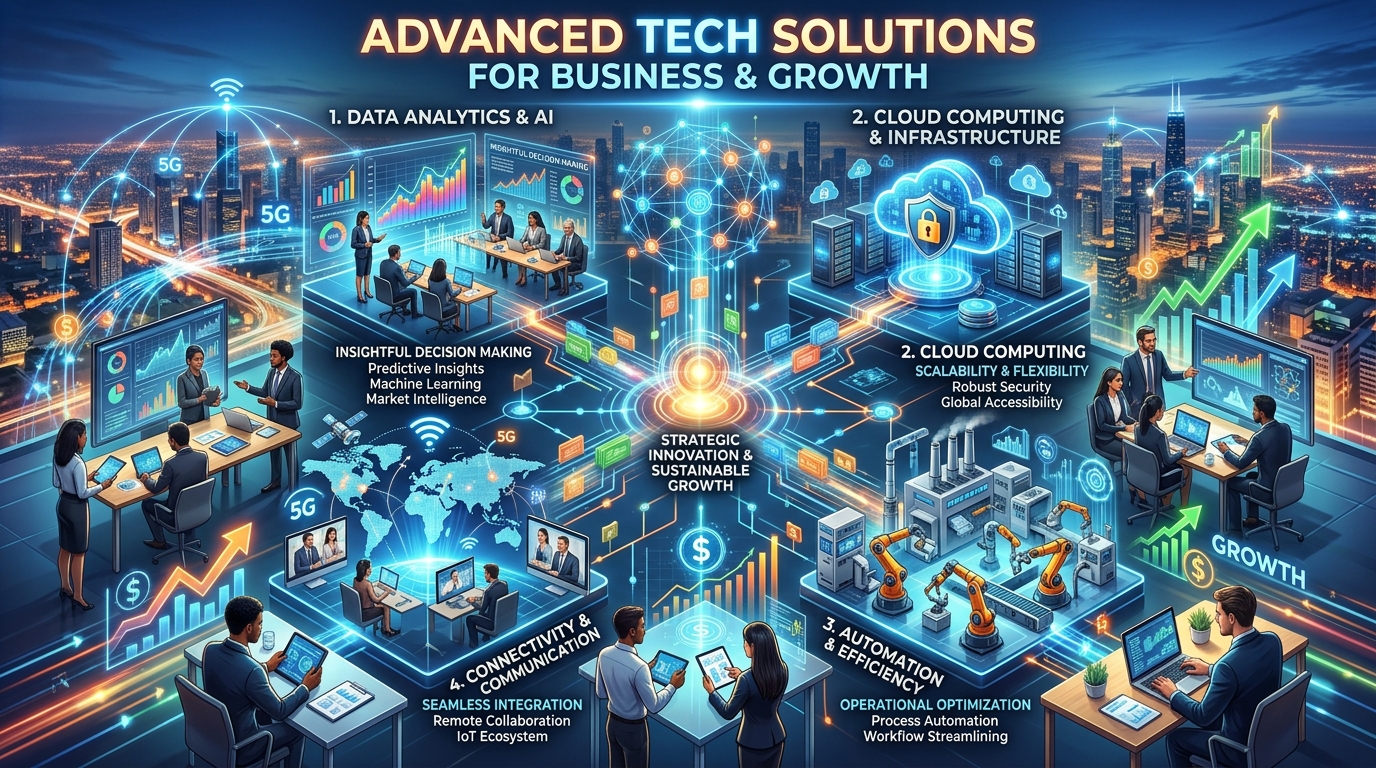
Advanced tech solutions are reshaping how modern businesses operate, scale, and compete in global markets. From automation and artificial intelligence to cloud computing and data analytics, companies now rely on smart technologies to improve efficiency, reduce costs, and accelerate growth. These innovations help organizations make faster decisions, enhance customer experiences, and build stronger digital foundations for long-term success in an increasingly competitive business environment.
| Tech Solution | Business Benefit |
|---|---|
| Cloud Computing | Flexible Operations |
| AI Automation | Faster Processes |
| Data Analytics | Better Decisions |
| Cybersecurity Tools | Safer Systems |
| CRM Platforms | Stronger Customer Relations |
Cloud Computing Solutions
Scalable Business Infrastructure
Cloud computing allows businesses to scale operations instantly without heavy investment in physical infrastructure. Companies can expand storage, applications, and computing power based on demand. This flexibility helps startups and enterprises manage growth efficiently while reducing operational limitations and improving overall performance across digital platforms.
Cost Efficient IT Management
Cloud solutions significantly reduce IT expenses by eliminating the need for expensive hardware and maintenance systems. Businesses only pay for the services they use, making budgeting more predictable and efficient. This cost effectiveness allows organizations to allocate resources toward innovation, marketing, and strategic growth initiatives more effectively.
Remote Work Enablement
Cloud technology supports remote work by allowing employees to access files, applications, and systems from anywhere. This improves productivity, collaboration, and flexibility in modern workplaces. Teams can work seamlessly across different locations while maintaining secure access to essential business data and communication tools in real time.
Data Backup And Recovery
Cloud systems provide reliable data backup and disaster recovery solutions for businesses of all sizes. Important files are stored securely and can be restored quickly in case of system failure or cyber incidents. This ensures business continuity and minimizes downtime, protecting both revenue and customer trust effectively.
Collaboration Platforms
Cloud based collaboration tools improve teamwork by enabling real time communication and document sharing. Employees can work together on projects simultaneously, regardless of location. This enhances efficiency, reduces delays, and promotes better coordination between departments, leading to improved project outcomes and smoother business operations overall.
Artificial Intelligence In Business
Process Automation Systems
Artificial intelligence automates repetitive business tasks such as data entry, scheduling, and customer support. This reduces human workload and increases operational efficiency. Businesses can focus more on strategic planning and innovation while AI handles routine processes with speed, accuracy, and consistency across departments.
Predictive Business Analytics
AI powered analytics tools help businesses forecast trends, customer behavior, and market demands accurately. These insights allow companies to make informed decisions and reduce risks. By analyzing large datasets, AI helps organizations identify opportunities early and adapt strategies for improved performance and competitive advantage.
Intelligent Customer Support
AI chatbots and virtual assistants provide instant customer support around the clock. They handle inquiries, resolve common issues, and improve response times significantly. This enhances customer satisfaction while reducing the need for large support teams, making business operations more efficient and cost effective.
Personalized Marketing Campaigns
Artificial intelligence enables businesses to create highly targeted marketing strategies based on customer behavior and preferences. This improves engagement and conversion rates. Personalized campaigns help companies connect with audiences more effectively, increasing brand loyalty and maximizing return on marketing investments across digital channels.
Fraud Detection Systems
AI driven security systems help detect unusual transactions and prevent fraud in real time. These systems analyze patterns and flag suspicious activities instantly. Businesses benefit from improved financial security, reduced losses, and stronger trust from customers and stakeholders through enhanced protection mechanisms.
Big Data Analytics
Customer Behavior Insights
Big data analytics helps businesses understand customer preferences, buying patterns, and behavior trends. This allows companies to design better products and services. By analyzing large volumes of data, organizations can improve customer satisfaction and create more effective marketing and sales strategies.
Real Time Decision Making
Businesses use big data tools to make faster and more accurate decisions based on real time information. This reduces delays and improves responsiveness to market changes. Companies gain a competitive advantage by reacting quickly to trends, demands, and operational challenges effectively.
Performance Optimization Tools
Data analytics helps organizations monitor and improve business performance across departments. Key performance indicators are tracked continuously to identify inefficiencies. This enables companies to optimize processes, increase productivity, and achieve better results in operations, sales, and customer service functions consistently.
Market Trend Analysis
Big data systems analyze market conditions to identify emerging trends and opportunities. Businesses can adjust strategies based on accurate insights. This helps organizations stay ahead of competitors by anticipating changes and adapting quickly to evolving customer needs and industry developments.
Risk Management Solutions
Analytics tools help businesses identify potential risks before they become critical problems. By evaluating historical and current data, companies can develop preventive strategies. This improves decision making, reduces uncertainty, and enhances overall business stability and long term sustainability.
Cybersecurity Technologies
Threat Detection Systems
Cybersecurity tools monitor networks continuously to detect potential threats and suspicious activities. These systems use advanced algorithms to identify risks early. Businesses benefit from stronger protection against cyber attacks, ensuring data safety and uninterrupted operations across digital platforms and systems.
Data Encryption Solutions
Encryption technologies protect sensitive business data by converting it into secure formats. Only authorized users can access the information. This ensures confidentiality and reduces the risk of data breaches, helping companies maintain trust and comply with regulatory security standards effectively.
Firewall Protection Systems
Firewalls act as barriers between internal systems and external threats. They monitor and control incoming and outgoing network traffic. Businesses use firewalls to prevent unauthorized access and protect critical data from cyber criminals and malicious attacks across digital environments.
Identity Access Management
Identity management systems control user access to business applications and data. Only authorized personnel can access specific resources. This reduces security risks and ensures proper governance within organizations while maintaining accountability and protecting sensitive information effectively.
Incident Response Solutions
Incident response systems help businesses react quickly to cyber attacks or security breaches. These tools minimize damage and restore normal operations efficiently. Organizations benefit from faster recovery, reduced downtime, and improved resilience against future cyber threats.
Customer Relationship Management Systems
Centralized Customer Data
CRM systems store all customer information in one centralized platform. This allows businesses to track interactions, purchase history, and preferences easily. Centralized data improves communication and helps companies deliver personalized services that enhance customer satisfaction and loyalty.
Sales Pipeline Management
CRM tools help businesses manage and track sales opportunities effectively. Teams can monitor leads, follow ups, and conversions in real time. This improves sales efficiency, increases revenue potential, and ensures better coordination between marketing and sales departments.
Automated Customer Communication
Automation features in CRM systems allow businesses to send emails, reminders, and updates automatically. This improves communication consistency and saves time for employees. Customers receive timely information, which enhances engagement and strengthens long term business relationships.
Performance Tracking Tools
CRM platforms provide detailed reports on sales performance and customer interactions. Businesses can evaluate employee productivity and campaign effectiveness. These insights help organizations make data driven improvements and optimize business strategies for better results.
Customer Retention Strategies
CRM systems help businesses build strong relationships by analyzing customer behavior and preferences. Companies can create loyalty programs and personalized offers. This increases customer retention, encourages repeat purchases, and strengthens brand trust over time.
Internet Of Things In Business
Smart Inventory Management
IoT technology helps businesses track inventory levels in real time using connected devices. This reduces stock shortages and overstocking issues. Companies benefit from improved supply chain efficiency and better resource management across warehouses and retail operations.
Connected Workplace Devices
IoT devices improve workplace efficiency by connecting equipment and systems for seamless communication. Smart sensors and devices automate tasks and monitor performance. This increases productivity and helps businesses manage operations more effectively across different departments.
Predictive Maintenance Systems
IoT enabled systems monitor equipment conditions and predict failures before they occur. This reduces downtime and maintenance costs significantly. Businesses benefit from improved operational reliability and longer equipment lifespan through proactive maintenance strategies.
Smart Logistics Solutions
IoT technology improves logistics by tracking shipments and optimizing delivery routes. Real time monitoring ensures efficient transportation and timely deliveries. This enhances customer satisfaction and reduces operational delays in supply chain processes.
Energy Management Systems
IoT based energy systems help businesses monitor and control energy usage efficiently. This reduces costs and supports sustainable practices. Companies can optimize power consumption while maintaining productivity and reducing environmental impact.
Digital Marketing Technologies
Search Engine Optimization Tools
SEO tools help businesses improve online visibility and attract more website traffic. These technologies analyze keywords and optimize content performance. This increases brand exposure and helps companies reach target audiences effectively across digital platforms.
Social Media Automation
Automation tools simplify social media management by scheduling posts and analyzing engagement. Businesses can maintain consistent online presence without manual effort. This improves marketing efficiency and strengthens audience interaction across multiple platforms.
Email Marketing Platforms
Email marketing systems allow businesses to send targeted campaigns to customers efficiently. Personalized messages improve engagement and conversion rates. These platforms help companies build strong customer relationships and increase sales opportunities.
Content Management Systems
CMS platforms enable businesses to create, manage, and publish digital content easily. This improves website performance and user experience. Companies benefit from organized workflows and consistent branding across online channels.
Analytics And Reporting Tools
Marketing analytics tools measure campaign performance and customer engagement. Businesses can track success and adjust strategies accordingly. This improves decision making and ensures better return on marketing investments.
How do tech solutions improve business growth?
Tech solutions improve efficiency, reduce costs, automate processes, and enhance decision making for faster business growth.
Which technology is most important for modern businesses?
Cloud computing, artificial intelligence, cybersecurity, and data analytics are essential for modern business success.
How does AI help companies?
AI helps automate tasks, analyze data, improve customer service, and optimize marketing strategies effectively.
Why is cybersecurity important for businesses?
Cybersecurity protects sensitive data, prevents cyber attacks, and ensures safe digital business operations.
What is the role of CRM systems?
CRM systems help manage customer data, improve communication, and increase customer retention and sales.
Advanced tech solutions for business and growth empower organizations to operate smarter, faster, and more efficiently in today’s digital world. From AI automation to cloud computing and cybersecurity, these technologies enhance productivity, decision making, and customer experience. Businesses that adopt modern digital tools gain stronger competitiveness, improved scalability, and long term sustainable growth in rapidly evolving global markets.
